Fiber Musings

Random thoughts of a fiber enthusiast - mostly fiber related, sometimes coherent

Almost Done!

The Mitered Non-Cross Blanket is almost done! I finished off all the blocks and spent better part of 2 days seaming the blocks together.

My little helper

My little helper

When I knitted my blocks, I slipped the first stitch of each row. This allowed the sides to look just like the casted off edge. It also made picking up stitches a lot easier.

When joining the blocks, I single crocheted the blocks together through the back loop of the chained edges. This allowed the edges of the blocks to butt up against each other with a small little gutter in between the blocks.

JoinedBlocks

Joined edge

I don’t know where I read this but I think it was in the notes for a granny square blanket. It was probably the same place that I read about joining them in a zig zag pattern. Hard to describe, but start with a corner and attach the 2 adjacent blocks consecutively, without breaking yarn. Just continue to crochet around the corner and pick up the new block. You will now have 3 blocks connected, with 2 of them aligned diagonally. Continue and work the next diagonal on your blanket, zigging and zagging as you go. I found that doing a slip stitch as you round an outside corner will provide the extra give. And when you come to an inside corner, slip stitch into the corner stitch of the block diagonally away to close the gap.

My idea was that this would create fewer ends to weave in because I will already have enough ends to weave in!

Don’t believe me? A picture is worth a thousand words. Or in this case, a thousand ends.
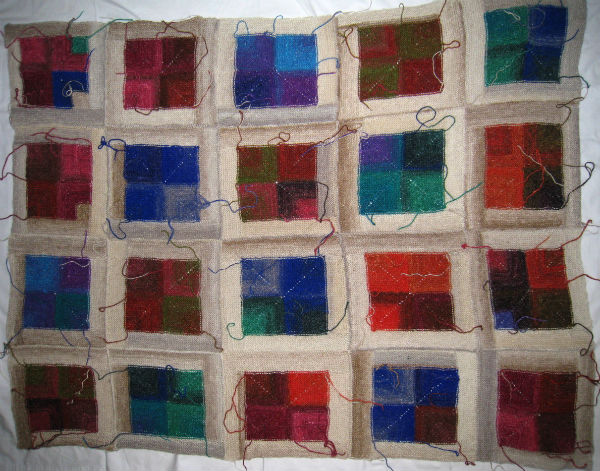
MiteredBack

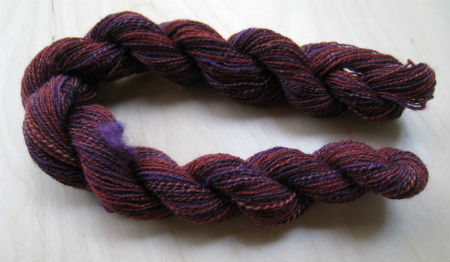
Mini Skein

CHF_Skein

Specs:

  • fiber: 85/15 polworth/silk
  • length: approx. 110 yards
  • weigth: approx. 10 grams
  • singles: supported spindle
  • plied: top whorl drop spindle

Spinning, Supported Style

Click for full size

Click for full size

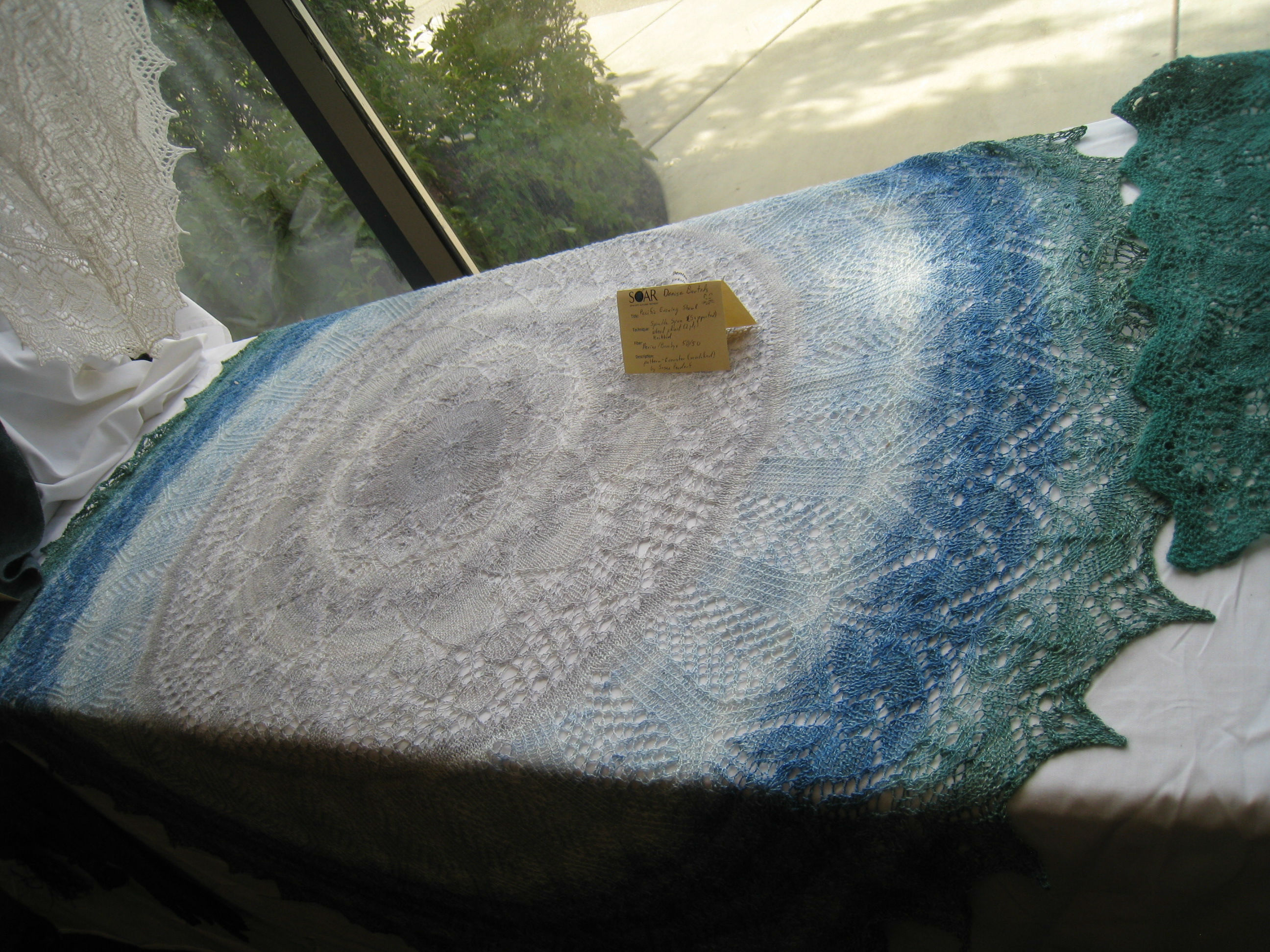
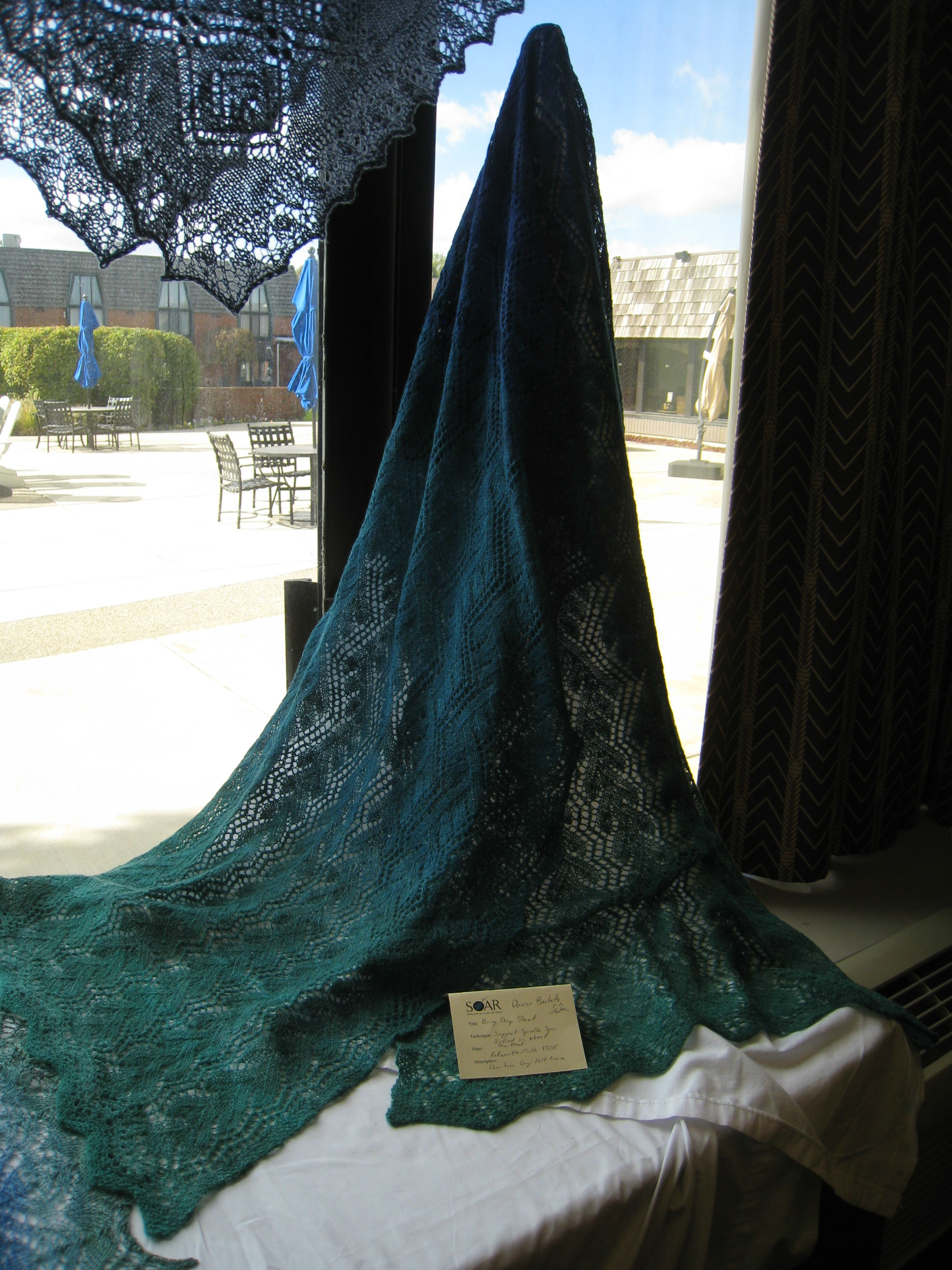
There are many sources of inspiration at SOAR. One of them is the Spinners’ Gallery.

This pair of shawls were spun and knitted by Denise Bartels. These beauties were spun on supported spindles and plied on the spinning wheel. The spinning, the knitting, and the blocking were absolutely perfect.

They inspired me to pull out my supported spindle collection and spin on them again.  I have never been able to spin more than a few yards here an there (other than cotton on tahklis). I’m not sure why. It just seemed such a slow way to make yarn. But then, 2 years to spin and ply 2 oz of silk isn’t exactly blazingly fast either.

It also has never occurred to me to spin wool on supported spindles either. I don’t know why but I only associate short fibers with supported spinning.

Once I returned home, I pulled out my supported spindle collection. I only have 3 in my collection so I took them out for a test drive. One of them has some cashmere that I started at SOAR in 2012. I didn’t get very far with them. I spun a bit, and it was a bit of a slog.

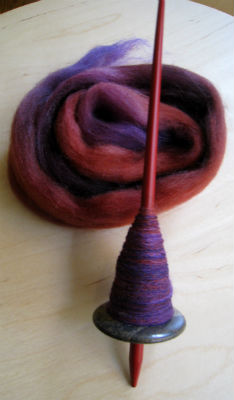
I pulled out another spindle and a small bit of merino/silk that was leftover from another project. This went much better, especially once I pre-drafted the heck out of it before spinning over the fold. But the spindle shaft was too fat at the tip. I will need to sand it down.

CHF_Supported

Spun Singles!

Then I went to the 3rd supported spindle I have. It is one of a pair that I purchased years ago at another SOAR. One is maple (cashmere project) and one is walnut. Both gorgeous, but heavy. Really heavy.

Feeling a bit like Goldilocks, I looked around and found the stone bead supported spindle I made years ago and a bit of sample fluff from Corgi Hill Farm, I sat down to spin.

I think I’m finally getting it! It will be a while before I gain proficiency, but it’s definitely looking like lace weight yarn!

Will this take over as my preferred spinning method? No. I doubt it, but it is nice to have this successfully in my spinning repertoire.

Page 28 of 271

Powered by WordPress & Theme by Anders Norén